



3rd August 2026
Electronic Leak Detection Testing Procedure: A Technical Guide for Commercial Property
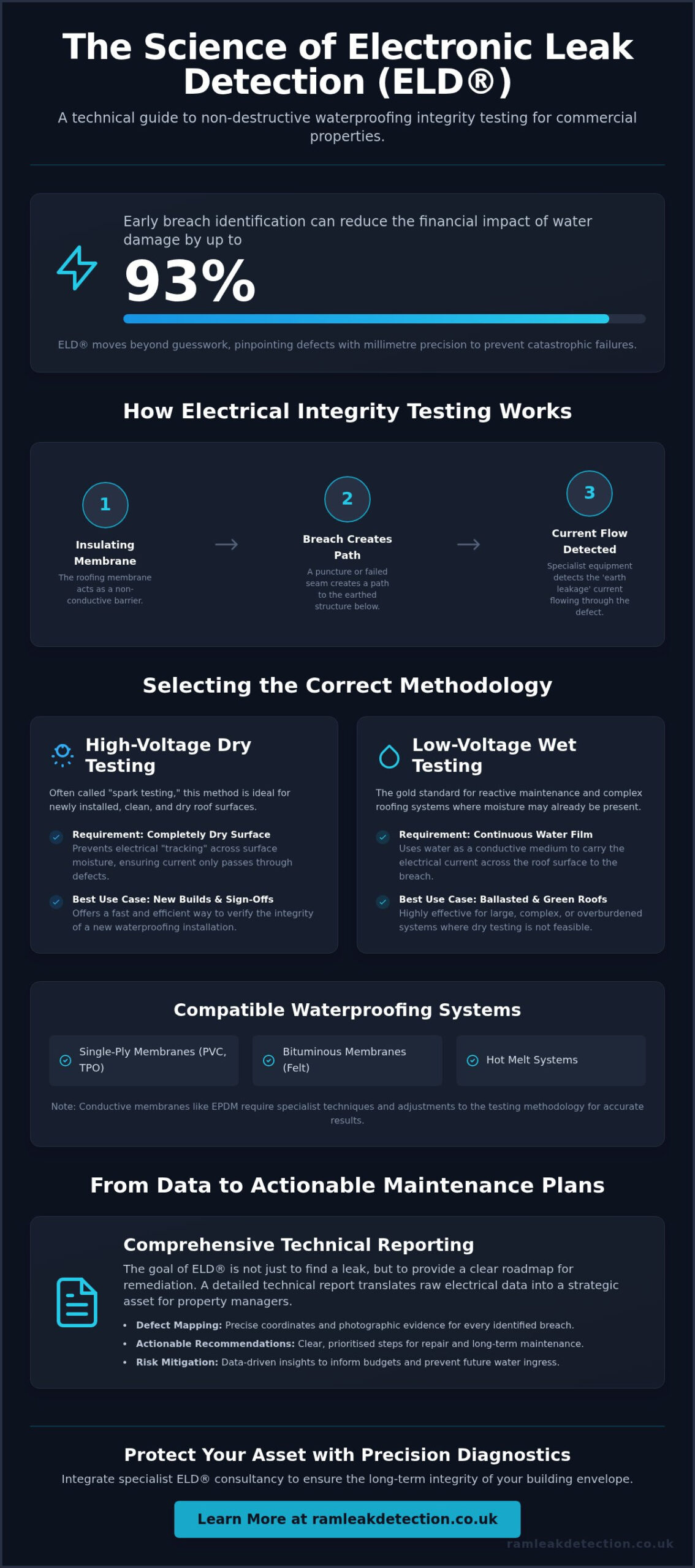
Did you know that identifying a breach early can reduce the financial impact of water damage by as much as 93%? For commercial property managers, the challenge isn’t just knowing a leak exists but pinpointing its exact origin without resorting to invasive and disruptive traditional methods. Adopting a rigorous electronic leak detection testing procedure allows for the identification of defects with millimetre precision, moving beyond the guesswork of visual inspections or the logistical nightmare of flood testing.
It’s understandable to feel a sense of trepidation when water ingress threatens the structural integrity of a flat roof, especially when the entry point remains hidden beneath complex layers. This guide provides a technical walkthrough of non-destructive ELD® methodologies, including both high-voltage and low-voltage applications. You’ll gain a clear understanding of how these scientific investigations replace uncertainty with data-driven insights, offering a definitive roadmap for your long-term maintenance planning and risk mitigation strategies.
Key Takeaways
- Understand the core principle of utilising the electrical insulation properties of roofing membranes to identify breaches with absolute precision.
- Identify the specific environmental and technical criteria used to select the correct electronic leak detection testing procedure between wet and dry methodologies.
- Familiarise yourself with the essential site preparation and safety protocols required to maintain the clinical accuracy of non-destructive testing.
- Learn how technical condition reports translate raw data into actionable maintenance plans through comprehensive defect mapping and photographic evidence.
- Recognise the value of integrating specialist consultancy and Dynamic Leak Investigations (DLI®) to address complex structural challenges in the building envelope.
What is Electronic Leak Detection (ELD®) for Commercial Roofs?
Electronic Leak Detection (ELD®) represents a sophisticated, non-invasive diagnostic methodology designed to verify the integrity of waterproofing systems with clinical precision. Unlike traditional investigative techniques that often rely on visual guesswork or destructive sampling, ELD® functions as a high-tech audit of the building envelope. It identifies breaches that are frequently invisible to the naked eye, ensuring that even the smallest defects are documented before they escalate into systemic structural failures.
The implementation of an electronic leak detection testing procedure offers a significant technical advantage over conventional flood testing. Whilst flood testing requires the application of immense volumes of water, creating substantial weight loads and the risk of secondary damage, ELD® is a dry or minimally damp process. It eliminates the logistical disruption of blocking drainage systems and provides a more reliable outcome by pinpointing the exact coordinates of a leak rather than merely confirming that one exists. The success of this process relies heavily on the expertise of a qualified engineer. These specialists don’t just operate the equipment; they interpret complex electrical signals and environmental variables to differentiate between true defects and false positives caused by surface contaminants or structural metalwork.
The Science of Electrical Integrity Testing
The fundamental principle of ELD® rests on the fact that most roofing membranes are effective electrical insulators. During the electronic leak detection testing procedure, the membrane acts as a barrier between two conductive layers: the structural substrate below and a scanning medium above. If a breach exists, an electrical path is completed. This “earth leakage” allows a controlled current to flow through the defect to the earthed substrate. Technicians use specialised equipment to track these electrical currents, utilizing vector mapping to follow the flow directly to its source. This scientific approach allows for the discovery of pinhole punctures or failed laps that would remain undetected during a standard survey.
Suitable Roof Membranes for Electronic Testing
Most modern waterproofing systems are compatible with electronic testing, provided they possess the necessary insulative properties. The procedure is highly effective on:
- Single-ply membranes: Such as PVC and TPO, which provide excellent resistance.
- Bituminous membranes: Including felt and reinforced bitumen sheets.
- Hot melt systems: Provided the surface is appropriately prepared for the scanning equipment.
Specific technical challenges arise with EPDM membranes or certain “black” membranes that contain high levels of carbon black. Because carbon is conductive, these materials can sometimes allow electricity to pass through the membrane itself rather than just through defects. In such instances, a seasoned specialist will adjust the methodology, perhaps employing high-voltage “spark testing” or ensuring the presence of a conductive wire grid beneath the membrane during installation to facilitate accurate data collection.
Dry vs. Wet Testing: Selecting the Correct Methodology
The selection of a specific electronic leak detection testing procedure is dictated by the environmental conditions and the physical characteristics of the roofing system under investigation. Technical specialists generally categorise these investigations into two primary branches: high-voltage dry testing and low-voltage wet testing. According to technical documentation from the International Institute of Building Enclosure Consultants (IIBEC) regarding Electronic Leak Detection, the efficacy of each method depends on maintaining a clear electrical path between the scanning equipment and the conductive substrate. Whilst dry testing is often preferred for new build sign-offs due to its speed and lack of water requirement, wet testing remains the gold standard for reactive maintenance on large, ballasted, or green roof systems where moisture is already present.
Environmental variables play a critical role in methodology selection. High-voltage testing requires a completely dry surface to prevent “tracking,” where electricity travels across surface moisture rather than through a defect. Conversely, low-voltage testing necessitates a continuous film of water to act as the conductive medium. Wind speeds must also be monitored; excessive gusts can compromise the safety of technicians handling high-voltage equipment and may prematurely dry surfaces during a wet test. Surface contaminants such as salt deposits or heavy silt can also interfere with electrical conductivity, necessitating a thorough pre-test cleaning to ensure the data’s integrity. For complex commercial assets where the source of ingress remains elusive, a specialist technical assessment can determine which methodology will yield the most accurate results.
The High-Voltage Dry Test Procedure
The high-voltage methodology involves passing a specialised phosphor-bronze brush over the membrane surface. A regulated D.C. current is applied to the brush, with the structural deck acting as the earth. If the brush passes over a breach, the electrical circuit is completed, triggering an immediate audible and visual alert on the technician’s equipment. This method is particularly effective for vertical upstands, complex detailing, and parapet walls where maintaining a water film for low-voltage testing would be physically impossible. It’s a rapid, clinical process that allows for the immediate marking and repair of defects.
Low-Voltage Wet Testing (Vector Mapping)
Low-voltage testing, often referred to as vector mapping, utilises a pulse generator to send a controlled electrical charge through a thin film of water applied to the roof surface. A boundary wire is established around the test area to create a contained electrical field. When a breach exists, the current flows through the water, through the defect, and towards the earthed substrate. Technicians use two handheld probes to track the direction of this current. By following the voltage potential, the engineer can pinpoint the exact entry point of the water with millimetre precision, regardless of how far the water has travelled beneath the membrane layers.
The Step-by-Step Electronic Leak Detection Testing Procedure
The operational phase of a professional investigative survey begins long before equipment is activated. Every electronic leak detection testing procedure must commence with a rigorous site assessment and a comprehensive safety briefing tailored to the specific challenges of working at height. Our technical teams evaluate the structural layout, identifying potential hazards such as fragile roof sections or unprotected edges. This methodical preparation ensures that the subsequent investigation is conducted within a controlled environment, prioritising the safety of the engineering team whilst maintaining the integrity of the data collected.
Once safety protocols are established, the focus shifts to the physical state of the building envelope. A successful investigation requires a surface that is clear of debris, silt, and standing water, as these contaminants can lead to “tracking” and false positive signals. The accuracy of the results is directly proportional to the quality of the surface preparation. By ensuring the membrane is in the optimal state for conductivity or insulation, technicians can distinguish between a minor surface anomaly and a genuine structural breach.
Preparation and De-watering Requirements
Accurate results are often compromised by interstitial moisture trapped within the roofing assembly. In instances where a system is heavily saturated, the application of De-watering Vacuum (DWV®) technology becomes essential. This specialised process removes excess moisture that would otherwise interfere with electrical signals, a critical step that is frequently overlooked by less experienced providers. Additionally, all peripheral metalwork, plant supports, and lightning conductors must be correctly identified and, where necessary, isolated. This isolation prevents the electrical current from grounding prematurely, ensuring the circuit only completes when a defect is encountered.
Executing the Systematic Investigation
The actual electronic leak detection testing procedure follows a disciplined, grid-based approach. Technicians don’t simply scan at random; they execute a series of overlapping “sweeps” to ensure 100% coverage of the roof area. This methodical pattern is vital for identifying defects that are invisible to the naked eye, such as hairline fractures in a lap weld or pinhole punctures caused by foot traffic. Special attention is directed towards high-risk zones, including rainwater outlets, parapet upstands, and complex plant penetrations where mechanical stress is most prevalent.
As defects are identified, they’re marked immediately on the roof surface using non-permanent, high-visibility markers. This allow for instant verification and provides a clear reference for the repair teams who follow. Simultaneously, every breach is logged using real-time data capture tools, which may include GPS tagging or precise plotting on digital site maps. This systematic documentation ensures that the final technical report provides an exact mirror of the roof’s current condition, replacing anecdotal evidence with forensic data.
Beyond Detection: Technical Reporting and Maintenance Planning
The completion of the physical electronic leak detection testing procedure marks the transition from active field investigation to the critical phase of data synthesis. A professional investigative survey is only as valuable as the resulting technical condition report, which must serve as a forensic record of the building envelope’s integrity. Rather than providing a simple list of defects, a high-level report delivers a structured diagnostic overview, utilised by facilities managers and surveyors to justify capital expenditure and prioritise remedial interventions. This document ensures that the precise coordinates identified during the site “sweep” are translated into a permanent, auditable record.
The inclusion of high-resolution photographic evidence and digital defect mapping is non-negotiable for commercial-grade reporting. Each breach is documented in situ, providing clear visual context that assists repair contractors in locating and addressing the issues without further diagnostic work. This level of detail eliminates the ambiguity often associated with traditional roof surveys, allowing for a clinical approach to maintenance where resources are directed only where they are demonstrably required. By integrating these results into a broader building envelope strategy, property owners can move away from speculative repairs and towards a precision-led maintenance model.
Analysing the Technical Condition Report
A sophisticated report employs a severity grading system to categorise identified membrane breaches based on their potential for structural impact. This grading allows stakeholders to distinguish between minor surface abrasions and critical failures that require immediate attention. Technical recommendations for remedial works should be specific, outlining the necessary materials and methodologies to restore the system’s integrity. It is essential that this reporting is delivered by an independent consultancy, ensuring that the findings remain neutral and are not influenced by the commercial interests of a roofing contractor.
Strategic Asset Management for Commercial Property
Data derived from an electronic leak detection testing procedure is fundamental to proactive asset management. When combined with moisture mapping, this information helps determine if water ingress has caused sub-surface saturation, which might necessitate more than just a surface repair. For commercial landlords, these reports are vital for ensuring RICS compliance during property valuations or dilapidation negotiations. They provide a data-driven baseline of the roof’s condition, which is indispensable for long-term budget allocation and the mitigation of insurance risks. Secure the longevity of your commercial assets by commissioning a comprehensive technical condition report from our specialist consultancy.
The Role of Specialist Consultancy in Building Envelope Integrity
Engaging a specialist consultancy ensures that the electronic leak detection testing procedure is part of a wider, more robust investigative framework rather than a standalone exercise. With 40 years of industry experience, our technical teams possess the diagnostic intuition required to solve complex structural issues that automated equipment alone might overlook. This experience is particularly vital when dealing with legacy assets where multiple layers of waterproofing or non-standard detailing complicate the path of water ingress. By utilising RICS-regulated engineers, property owners gain the assurance that their surveys are conducted to the highest professional standards, providing reliable data for insurance claims or property transactions.
The synergy between ELD® and Dynamic Leak Investigations (DLI®) allows for a forensic level of scrutiny across the entire building envelope. Whilst ELD® identifies specific membrane defects, DLI® examines the broader performance of the system under environmental stress. Such an integrated approach ensures that no stone is left unturned. Crucially, these methodologies are designed to be entirely non-disruptive. Commercial operations can continue without the noise, mess, or logistical delays associated with traditional roofing repairs or extensive flood testing, preserving the productivity of the site throughout the investigative process.
Comprehensive Envelope Diagnostics
Achieving a 360-degree view of a building’s health often requires combining the electronic leak detection testing procedure with thermographic imaging and rainwater outlet testing. This multi-layered diagnostic approach identifies not only where the water is entering through the membrane but also where thermal bridges or fabric failures are compromising the weather tightness of the building. By acting as a single-source consultancy for all building defects, we eliminate the need for multiple contractors, providing a cohesive and clear path to remediation that addresses the root cause of ingress rather than merely treating the symptoms.
Peace of Mind through Precision
The ultimate goal of precision testing is to protect the structural integrity and financial value of the commercial asset. By pinpointing exact defects, building owners can avoid the massive capital expenditure of unnecessary roof replacements, often extending the life of an existing system by several years through targeted repairs. Adopting this data-driven approach replaces uncertainty with confidence, ensuring that maintenance budgets are spent effectively and that the building remains a secure, high-performing asset. To safeguard your property and mitigate long-term risk, organise a professional leak investigation with RAM Building Consultancy today.
Securing Structural Integrity Through Precision Diagnostics
The implementation of a rigorous electronic leak detection testing procedure is a fundamental component of professional asset management. By transitioning from reactive visual inspections to data-driven investigations, property managers can identify defects with millimetre accuracy before they compromise the structural deck. This guide has detailed how the selection of appropriate wet or dry methodologies, combined with expert interpretation, replaces uncertainty with actionable technical reporting. It’s a scientific approach that prioritises the longevity of the building envelope whilst ensuring minimal disruption to daily operations.
Utilising these non-invasive techniques allows for the forensic mapping of leaks without the risks associated with traditional flood testing. With over 40 years of industry-leading expertise, our RICS Regulated Consultancy provides the specialised insights necessary to protect high-value commercial assets. By integrating ELD® and DLI® techniques, we ensure that every breach is documented and every maintenance budget is strategically allocated. Take the first step towards definitive structural clarity today.
Request a Technical Proposal for Your Commercial Property and ensure your assets remain secure and high-performing.
Frequently Asked Questions
Is the electronic leak detection testing procedure safe for my roof membrane?
The electronic leak detection testing procedure is entirely non-destructive and poses no risk to the structural integrity of the waterproofing membrane. High-voltage equipment utilises a very low current that cannot puncture the material, whilst low-voltage systems operate on a harmless electrical pulse. This scientific approach ensures that the diagnostic process identifies existing defects without creating new ones, maintaining the manufacturer’s warranty.
How long does a typical electronic leak detection survey take to complete?
The duration of a survey is determined by the total surface area and the complexity of the roof’s detailing. A standard commercial unit might be comprehensively tested within a single working day. Larger industrial complexes or roofs with extensive plant equipment may require multiple days to ensure 100% coverage and precise defect mapping. The process is methodical and deliberate to ensure no pinhole is overlooked.
Can electronic testing find leaks through paving or green roof ballast?
Electronic testing is most accurate when performed directly on the waterproofing membrane before the installation of overburden. Current industry standards indicate that testing through layers of soil or paving is often inconclusive because the electrical path is obscured. For ballasted systems, it’s typically necessary to clear specific sections or perform the test during the construction phase before the ballast is applied.
Does the roof need to be completely dry for an ELD scan?
Surface requirements depend entirely on the specific methodology selected for the investigation. High-voltage “spark” testing requires a completely dry surface to prevent the current from tracking across surface moisture rather than through a defect. In contrast, low-voltage vector mapping necessitates a continuous film of water to act as the conductive medium for the electrical pulse across the membrane.
What is the difference between high-voltage and low-voltage testing?
High-voltage testing is a dry method that uses a phosphor-bronze brush to identify breaches by completing a circuit with the structural deck. Low-voltage testing is a wet method that establishes an electric field across a damp membrane. Technicians use handheld probes to track current flow towards a defect, which makes it particularly effective for large, flat areas where water entry points are elusive.
Can ELD identify trapped moisture beneath the roofing membrane?
ELD® is designed to pinpoint the physical entry point of water rather than measuring sub-surface saturation. To identify trapped moisture or interstitial condensation, our engineers utilise an Electrical Capacitance Test (ECT®) or Moisture Mapping. These complementary techniques provide a complete overview of the roof assembly’s condition, allowing for a more comprehensive understanding of potential structural risks.
Will the testing procedure disrupt the daily operations of my building?
The investigation is non-invasive and typically causes zero disruption to the building’s internal operations. Because the equipment is portable and quiet, there’s no requirement for heavy machinery or building closures. Technicians work externally on the roof level, which means your business activities can continue as normal throughout the survey without any loss of productivity or access.
Are the results of an electronic leak detection test accepted by insurance companies?
Professional technical reports generated from an ELD® survey are widely recognised and accepted by major insurers and loss adjusters. The forensic nature of the data, combined with photographic evidence and RICS-regulated oversight, provides the objective proof required for claim substantiation. This documentation replaces anecdotal evidence with verifiable, scientific facts, offering a clear path for resolving insurance disputes.